Key Takeaways
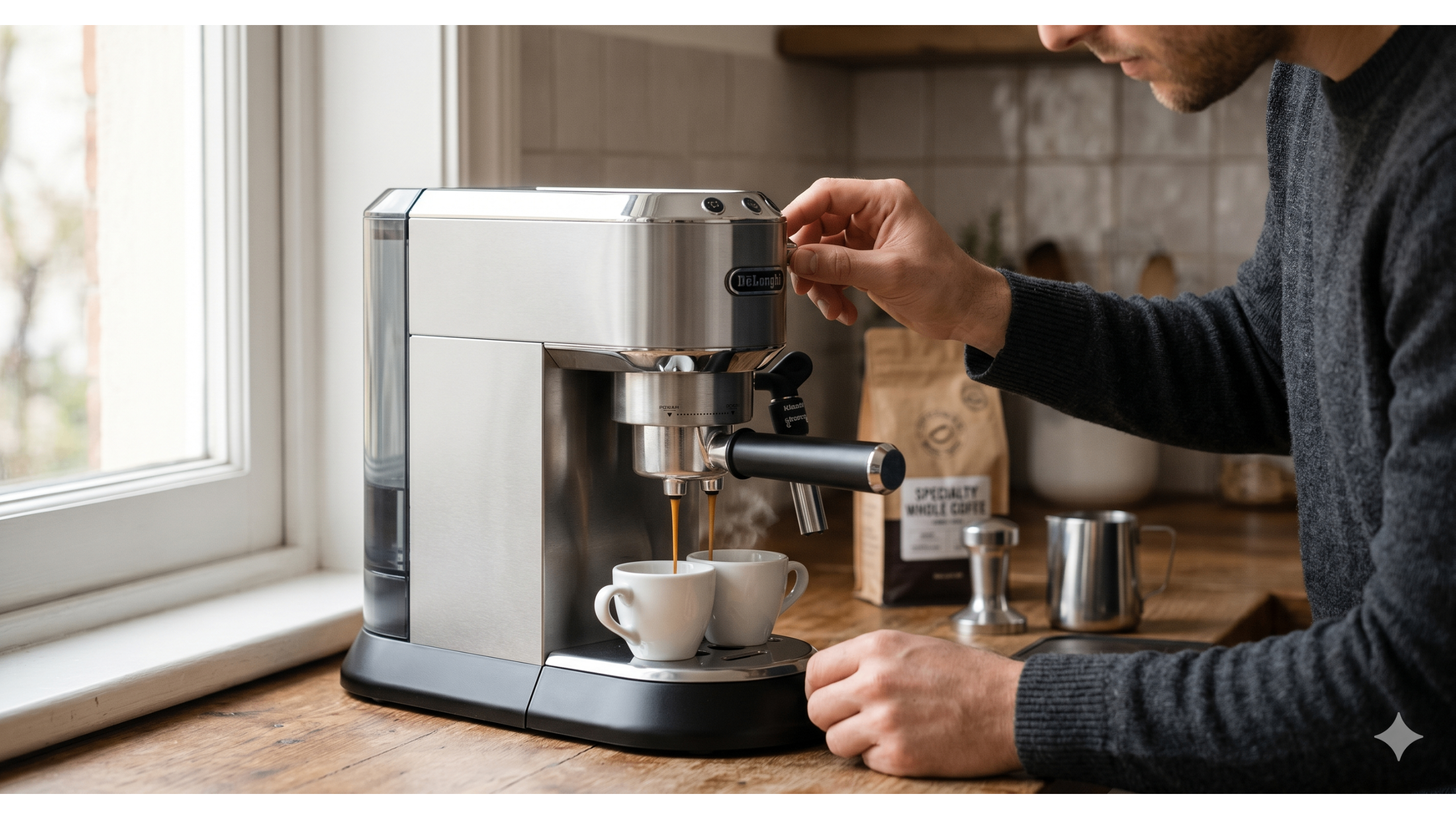
- The De’Longhi Dedica Maestro Plus EC950M delivers solid espresso quality at $349.95-$399.95 but falls short in milk frothing compared to the Breville Bambino Plus
- This compact machine excels with three adjustable temperature settings and pre-infusion, making it ideal for small kitchens and espresso enthusiasts
- Long-term reliability concerns include pump noise, vibration issues, and potential pressure loss after months of daily use
- The Breville Bambino Plus matches the Maestro Plus on price but wins decisively on milk texture and its 3-second heat-up versus the Maestro Plus’s thermoblock warm-up makes it the faster daily driver
- Best suited for users who prioritize espresso-focused control and pre-infusion tuning over automatic milk frothing, at the same price as the Bambino Plus
The De’Longhi Dedica Maestro Plus EC950M sits in a challenging position in the U.S. espresso market. At $349.95-$399.95, it promises premium features in a compact package, but does it deliver enough value to justify choosing it over proven alternatives like the Breville Bambino Plus? This review examines real-world performance, long-term ownership reality, and whether this machine deserves space on your countertop.
The $400 Decision: Maestro Plus vs. Your Alternatives
The Maestro Plus enters a genuinely competitive field at $349.95-$399.95 — a step up from the Dedica Arte (around $279-$299; check current pricing) and $150 above the Dedica Style ($249.95). At this price it sits directly alongside the Breville Bambino Plus (typically $399-$499; check current Amazon pricing), which shares a similar price point. The question isn’t whether it makes good espresso — it does. The question is which machine’s specific combination of features better matches your actual daily workflow.
This same-price positioning makes the comparison unusually clean. You’re not weighing whether a premium is worth paying; you’re choosing between two different design philosophies at the same investment level. The Maestro Plus bets on espresso control — three adjustable temperature presets, pre-infusion, non-pressurized baskets — while the Bambino Plus bets on milk system automation, instant heat-up, and a PID temperature controller fixed at approximately 93°C. Neither approach is strictly superior: the Maestro Plus gives you more temperature flexibility; the Bambino Plus holds its single temperature more precisely. Understanding which axis matters more to your routine is the entire decision.
One practical note: the Maestro Plus is occasionally available below its $399.95 MSRP — De’Longhi’s own US store has listed it at $349.95. Check current pricing before purchasing, as the gap between the two machines can widen or narrow depending on active promotions.
What You’re Actually Getting for $350-$400
Three Temperature Settings and Pre-Infusion
The Maestro Plus delivers genuine brewing control with three adjustable temperature settings (92°C, 94°C, and 96°C) and pre-infusion capability. This matters more than marketing suggests – temperature control directly impacts extraction quality, especially with light roasts that benefit from higher brewing temperatures. The pre-infusion function saturates coffee grounds before full pressure application, promoting more even extraction and potentially reducing channeling.
In practical terms, these features provide meaningful tuning options that basic Dedica models lack. Users can experiment with different temperature profiles to optimize extraction for specific beans or roast levels. However, the real-world impact depends heavily on grinder quality and technique – these controls enhance good coffee but can’t rescue poor preparation fundamentals.
Compact Design with Premium Accessories
The machine maintains the Dedica family’s space-efficient footprint at 8.15″ wide × 13.62″ deep × 13″ tall, making it suitable for cramped countertops where larger machines won’t fit. Worth flagging for accessory buyers: the Maestro Plus uses a 51mm portafilter — narrower than the Bambino Plus’s 54mm and the 58mm commercial standard. The aftermarket basket ecosystem for 51mm is thinner than for either larger size; third-party precision baskets exist but the selection is more limited. The included accessory bundle adds substantial value: both single-wall (non-pressurized) and double-wall (pressurized) filter baskets, a stainless steel tamper, and a milk pitcher.
These accessories matter because they eliminate immediate additional purchases. Single-wall baskets particularly important for serious espresso brewing, as they require proper grind and technique but reward users with better flavor clarity and crema quality. The metal tamper, while basic, represents a clear upgrade over plastic alternatives included with budget machines.
Auto LatteArt System vs. Manual Steaming Reality
The automatic LatteArt system sounds impressive but delivers mixed results in practice. While it consistently froths milk to preset temperatures and works with dairy alternatives like oat milk, the texture often resembles “stiff old school cappuccino froth” rather than the silky microfoam ideal for latte art. The system offers convenience but sacrifices the refined texture that separates good milk drinks from great ones.
Manual steaming mode frequently produces better results, giving experienced users more control over texture and temperature. However, this defeats the primary selling point of the automatic system and places the Maestro Plus in direct comparison with machines that excel at manual steaming without the complexity of dual modes.
Espresso Performance: Where It Excels
Temperature Control and Extraction Quality
The Maestro Plus shines in straight espresso preparation. Reviews consistently praise its ability to produce “great espresso” with solid crema and excellent flavor extraction. The thermoblock heating system provides quick warm-up times while the adjustable temperature settings allow fine-tuning for different coffee types and personal preferences.
Temperature stability proves solid during single shot preparation, though back-to-back brewing can stress the system. The three temperature options cover the practical brewing range effectively – 92°C works well for darker roasts, while 96°C helps extract brighter flavors from light roasts that might taste sour at lower temperatures.
Single-Wall Baskets Make the Difference
The inclusion of non-pressurized baskets elevates the espresso experience significantly compared to basic machines that rely solely on pressurized systems. Single-wall baskets require proper grind size and tamping technique but reward users with superior flavor clarity, proper crema formation, and the authentic espresso experience that pressurized baskets can’t replicate.
This feature alone justifies much of the price premium over basic Dedica models. Users serious about espresso quality will immediately notice the difference in shot quality, body, and overall flavor complexity when using appropriate grind and technique.
Milk Frothing: The Weak Link
Automatic vs Manual Steaming Results
The automatic milk frothing system represents the Maestro Plus’s most significant weakness. Despite offering three frothing settings and consistent temperature control, the texture rarely achieves the microfoam quality necessary for impressive latte art or premium café-style drinks. The foam tends toward dense, bubbly consistency rather than the smooth, integrated texture that characterizes well-steamed milk.
Manual mode often produces superior results, but this creates an inconsistent user experience. Users must choose between convenience with mediocre results or manual control with better texture but increased complexity and learning curve.
How It Compares to Breville Bambino Plus
Direct comparisons with the Bambino Plus highlight the Maestro Plus’s milk system limitations. The Bambino Plus’s automatic milk system consistently produces silkier microfoam that integrates better with espresso and creates more attractive latte art. The difference becomes particularly apparent when preparing multiple milk drinks or when texture quality directly impacts enjoyment.
The Bambino Plus also delivers significantly faster heat-up times, reaching brewing temperature in 3 seconds versus the Maestro Plus’s thermoblock warm-up. One functional gap worth flagging: the Maestro Plus has no hot water function at all — a notable omission at this price. The Bambino Plus can dispense hot water from its steam wand via a simultaneous two-button press, making Americanos workable if mildly awkward. Neither machine has a dedicated hot water button, but only the Maestro Plus leaves Americano drinkers without any option. These convenience factors compound the milk texture advantage, making the Bambino Plus more appealing for daily milk drink preparation.
Long-Term Ownership Reality
1. Pump Noise and Vibration Issues
Pump noise and vibration are consistent concerns in owner reviews and community threads. The compact design necessitates compromises in pump mounting and noise isolation, resulting in noticeable operation sounds during brewing and steam cycles. Reviewers note the noise becomes more apparent in quiet morning routines or open kitchen layouts. Owner communities report that rubber mats or dedicated machine platforms help reduce transmitted vibration, though the fundamental noise characteristics remain unchanged.
2. Over-Pressure Valve and Non-Pressurized Baskets
While De’Longhi’s official specifications state the machine delivers optimal 9 bar pressure during extraction, some user reviews suggest the over-pressure valve (OPV) operates at 11-12 bars, higher than the optimal 9 bars for non-pressurized baskets. This excessive pressure can lead to over-extraction, uneven flow, and channeling issues when using single-wall baskets with finer grinds. Some users address this through OPV modification, but such changes void warranties and require technical expertise.
This technical mismatch creates a frustrating situation where the machine includes premium baskets but may operate at pressures that compromise their performance. Users must either accept potentially suboptimal extraction or pursue modifications that eliminate manufacturer support.
3. Maintenance Requirements
Regular maintenance becomes critical for sustained performance. Descaling frequency depends on water hardness, and while the machine indicates when descaling is needed, it’s generally recommended to descale regularly, potentially monthly in moderate to hard water areas, for sustained performance. The steam wand demands immediate cleaning after each milk use to prevent clogging and maintain hygiene standards.
User reports indicate potential pressure loss issues after months of daily use, often linked to the OPV valve or pump, which may require replacement. While not universal, these reliability concerns suggest careful maintenance practices and realistic longevity expectations for heavy daily use scenarios.
Breville Bambino Plus: Same Price, Different Strengths
Milk System: Where the Bambino Plus Wins Clearly
At the same price point, the Bambino Plus’s most decisive advantage is its milk system. Its automatic frothing consistently produces café-quality microfoam with minimal user intervention, eliminating the texture inconsistencies that characterise the Maestro Plus’s Auto LatteArt system. This advantage compounds significantly for users who regularly prepare milk-based drinks or who entertain — the Bambino Plus delivers repeatably excellent results; the Maestro Plus requires more patience to coax the same quality from manual steaming mode.
The Bambino Plus also has simpler cleaning procedures for its milk system, which reduces daily maintenance friction.
Heat-Up Speed: 3 Seconds vs Thermoblock Warm-Up
The Bambino Plus reaches brewing temperature in 3 seconds via its ThermoJet system. The Maestro Plus uses a thermoblock with a warm-up of approximately 15-20 seconds before the first shot — noticeably longer, though still faster than traditional boiler machines. For most daily routines, the gap is real but manageable; it becomes more apparent if you pull back-to-back drinks or prefer to start the machine and brew immediately. This difference compounds over weeks of use and is particularly noticeable in multi-drink households.
The faster heat-up also enables tighter back-to-back drink preparation. The Maestro Plus’s thermoblock architecture creates pacing constraints that users making multiple drinks in sequence will encounter regularly.
Hot Water: A Real Difference Between These Two Machines
The Maestro Plus has no hot water function — there is no way to dispense hot water for Americanos or tea without a separate kettle. This is a genuine gap at this price, noted by multiple reviewers as a meaningful omission. The Bambino Plus is in a different position: it can dispense hot water from its steam wand by pressing the 1-cup and steam buttons simultaneously. It’s not a dedicated button, and it’s less convenient than the standalone Bambino’s single hot-water button, but the capability exists. If Americanos are part of your daily routine, this is a deciding factor in favour of the Bambino Plus.
Buy This If You Value Compact Design Over Perfect Milk
The De’Longhi Dedica Maestro Plus EC950M succeeds in specific scenarios despite its limitations. Choose this machine if counter space constraints make larger alternatives impractical, if espresso quality takes priority over milk drink perfection, or if the accessory bundle provides meaningful value for your setup.
The machine also suits users who appreciate temperature control options and pre-infusion features for espresso experimentation. Its adjustable brewing parameters offer more tuning capability than basic alternatives, appealing to enthusiasts who want to optimize extraction for different coffee types.
Avoid the Maestro Plus if milk drink quality significantly impacts your daily coffee enjoyment, if you prioritize convenience and speed over manual control, or if the Bambino Plus’s automatic milk system is the outcome you actually want — both machines cost the same, so there is no financial barrier to choosing it. The reliability concerns also suggest caution for users planning heavy daily use or expecting years of trouble-free operation.
The Maestro Plus occupies a clear but specific market niche: at the same price as the Bambino Plus, it offers espresso-focused control — adjustable temperatures, pre-infusion, non-pressurized baskets, a genuine accessory bundle — in exchange for a less capable milk system and slower heat-up. Whether that trade makes sense depends entirely on how you actually drink your coffee.
For expert guidance on choosing the right espresso machine for your specific needs and budget, visit BrewPrecision where detailed comparisons help home users make confident coffee equipment decisions.
BrewPrecision
Building 148741
PO Box 7169
Poole
England
BH15 9EL
United Kingdom