Key Takeaways
- Poor layout planning is the biggest trap in outdoor kitchen design, leading to cramped spaces and inefficient workflow that frustrates daily use
- Bakersfield’s extreme climate demands strategic material choices that can withstand intense UV exposure, heat swings, and dust accumulation
- Utility planning must happen before appliance selection to avoid expensive retrofitting of gas, electrical, and water lines
- Traffic flow mistakes create safety hazards when guests cut through cooking zones, requiring careful zone planning
- Early planning decisions directly control costs and prevent expensive changes during construction
The Hidden Cost of Poor Layout Planning
Most homeowners picture their dream outdoor kitchen around a premium grill and beautiful countertops. However, the biggest expense often comes from what they don’t see coming: layout mistakes that force expensive changes during construction. When the cooking zone feels cramped, utilities don’t reach where they’re needed, or guest traffic creates chaos during entertaining, the dream quickly turns into a design nightmare.
These layout traps catch even experienced homeowners off guard because outdoor kitchens require different planning than indoor spaces. The kitchen must work efficiently for cooking while also creating a natural gathering spot that connects seamlessly with patio entertaining. Without proper zone planning, homeowners often find their beautiful kitchen actually makes the backyard harder to use.
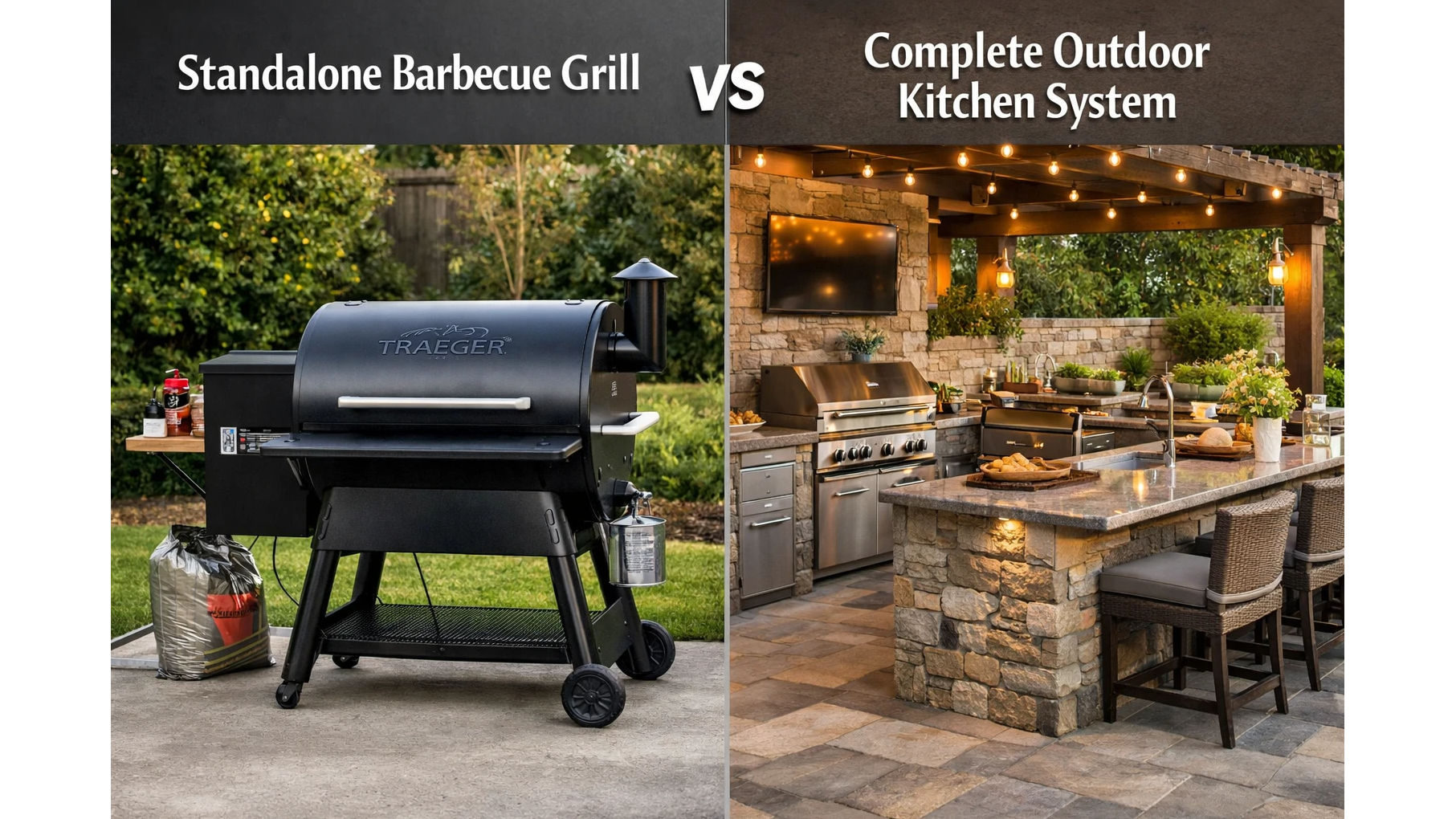
The most expensive layout mistakes happen when homeowners treat the outdoor kitchen as an afterthought rather than an integral part of their backyard design. Understanding the difference between a simple grill setup and a complete outdoor kitchen system helps homeowners avoid these costly planning oversights from the start.
Traffic Flow Mistakes That Kill Outdoor Kitchen Function
Beyond the Work Triangle: Creating Functional Zones
The traditional kitchen work triangle between grill, prep area, and refrigeration becomes even more critical outdoors where distances feel larger and movement patterns affect the entire patio. However, many outdoor kitchen layouts fail because they focus only on the cooking triangle while ignoring how guests move through the space. The result is a kitchen that works for one person but becomes chaotic during parties.
Successful outdoor kitchen zones separate cooking tasks from social areas without creating barriers. The prep zone needs at least 36 inches of counter space beside the grill, while the serving zone should flow naturally toward seating areas. Storage zones for utensils, plates, and supplies work best when positioned within easy reach of both prep and serving areas, creating a logical workflow that doesn’t conflict with guest movement.
Guest Paths Through Cooking Zones
One of the most dangerous layout traps occurs when guest circulation paths cut directly through the cooking zone. This creates safety hazards with hot surfaces and sharp tools while also making the cook feel constantly interrupted. Poor traffic flow planning forces guests to navigate around the cooking area to reach seating, drinks, or restrooms, creating congestion in the most active workspace.
Smart layouts create clear guest paths that bypass the cooking zone entirely. This might mean positioning the kitchen along one side of the patio rather than in the center, or creating a defined walkway that guides traffic around the work area. Bar-style seating can provide a natural buffer between cooking and circulation zones while still allowing conversation with the chef.
Cramped Counter Space Solutions
Insufficient counter space ranks among the most regretted outdoor kitchen decisions because adequate prep surfaces are essential for food safety and efficient cooking. Many layouts squeeze counter runs to save money upfront, only to find that 24 inches of prep space simply isn’t enough for real cooking tasks. Hot pots need landing space, ingredients require staging areas, and serving platters need assembly zones.
Effective counter planning requires at least 36 inches of prep space on one side of the grill, plus additional landing areas for serving dishes. Corner layouts can maximize counter runs in compact spaces, while L-shaped designs create natural work zones without feeling cramped. The key is planning counter space around actual cooking tasks rather than just visual balance.
Utility Planning Before Appliance Selection
Gas Line and Electrical Requirements
Installing gas lines and electrical systems after construction begins costs significantly more than incorporating them during initial planning. Many homeowners select appliances first, then find their chosen grill requires a larger gas line or their refrigeration needs more electrical capacity than originally planned. This backwards approach often leads to expensive utility modifications or appliance downgrades.
Professional gas line sizing depends on the total BTU requirements of all appliances combined, not just the main grill. Side burners, pizza ovens, and patio heaters all affect gas line capacity. Electrical planning must account for lighting, refrigeration, and convenience outlets, with all outdoor electrical components requiring Ground Fault Circuit Interrupted (GFCI) protection for safety and code compliance.
Water and Drainage Considerations
Water access transforms outdoor kitchen functionality by enabling fresh ingredient prep, easy cleanup, and beverage service. However, outdoor plumbing requires freeze protection, proper drainage, and strategic placement to avoid interfering with the cooking workflow. Many layouts add sinks as afterthoughts, creating awkward plumbing runs and drainage issues.
Effective water planning considers seasonal use patterns and maintenance requirements. Shut-off valves must be accessible for winterization, while drainage should direct water away from the kitchen foundation and patio surfaces. Grey water from outdoor sinks may require special drainage considerations depending on local regulations and soil conditions.
Bakersfield Climate Demands Strategic Material Choices
Heat and UV Protection for Surfaces
Bakersfield’s intense sun exposure and extreme heat cycles can destroy outdoor kitchen materials that perform well in milder climates. Surfaces that look perfect during installation may crack, fade, or warp within the first year if they’re not engineered for desert conditions. The region’s dramatic temperature swings create expansion and contraction cycles that stress joints, seals, and finish coatings.
Successful material strategies prioritize thermal stability and UV resistance over appearance alone. Natural stone and high-grade concrete perform better than laminated surfaces, while powder-coated metals resist fading better than painted finishes. Sealing strategies become critical for protecting porous materials from both moisture intrusion and thermal cycling damage.
Wind and Temperature Swing Solutions
Bakersfield’s temperature swings from hot days to cool evenings create unique design challenges for outdoor kitchens. Materials must handle thermal expansion without losing structural integrity, while finishes need consistency across temperature extremes. Wind patterns also affect cooking performance and user comfort, requiring strategic placement of wind screens and appliance positioning.
Effective climate-responsive design includes thermal breaks in metal components, expansion joints in large concrete runs, and wind protection that doesn’t block natural ventilation. Appliance selection should account for wind effects on cooking performance, while storage solutions must protect supplies from dust and temperature fluctuations.
Dust and Weather-Ready Components
Bakersfield’s dust and occasional weather extremes demand outdoor kitchen components that can handle exposure without constant maintenance. Dust infiltration affects both appearance and mechanical components, while occasional rain events test sealing and drainage systems. Standard residential-grade materials often fail under these conditions.
Weather-ready design emphasizes sealed storage, protected electrical components, and finishes that shed dust rather than trap it. Stainless steel appliances need proper grades for outdoor exposure, while cabinet hardware should resist corrosion and dust buildup. Regular maintenance becomes easier with materials and components designed for harsh outdoor conditions.
Integration Strategy for Complete Backyard Design
Natural Material Connections
Outdoor kitchens feel most successful when they connect naturally with the surrounding landscape rather than standing out as foreign additions. Material choices that echo existing hardscaping, architectural elements, or natural features help the kitchen feel like an organic extension of the outdoor living space. This integration strategy also tends to age better than contrasting design approaches.
Stone, brick, and earth-toned concrete create natural bridges between kitchen areas and landscape features. The goal is visual harmony that makes the kitchen feel intentional rather than added as an afterthought. Color palettes should complement both the home’s architecture and the natural environment rather than competing with them.
Hardscaping Flow Elements
Successful outdoor kitchen integration often depends on hardscaping elements that guide movement and define spaces without creating barriers. Paver pathways can direct traffic flow around cooking zones, while built-in benches provide seating that also defines space boundaries. These elements help organize the backyard layout while supporting kitchen functionality.
Plants and greenery soften hard edges while providing natural buffers between different activity zones. Strategic landscaping can create privacy for cooking areas, provide wind protection, and establish visual connections between the kitchen and other backyard features. The key is creating definition without isolation.
Cost Control Through Early Planning Decisions
Early planning decisions have the most direct impact on outdoor kitchen costs because they establish the project scope before expensive changes become necessary. Homeowners who rush into construction often find that their initial layout doesn’t support their actual needs, leading to costly modifications for additional storage, expanded counters, or relocated utilities.
Smart cost control starts with defining how the kitchen will actually be used, then planning the layout around those real needs rather than wishful thinking. This approach helps homeowners distinguish between must-have features and nice-to-have upgrades, preventing budget creep from scope changes during construction.
The most effective planning process involves comparing layout alternatives early, when changes cost nothing more than time and consideration. Once construction begins, even small modifications can trigger expensive utility relocations, structural changes, or material waste that could have been avoided with better initial planning.
Start with Layout Planning to Avoid These Expensive Mistakes
The smartest outdoor kitchen investments begin with thorough layout planning that addresses traffic flow, utility requirements, and climate considerations before any construction begins. This planning-first approach prevents the most expensive mistakes while ensuring the finished kitchen actually improves backyard functionality rather than creating new problems.
Successful outdoor kitchens require more than beautiful appliances and premium finishes. They need thoughtful integration with the backyard environment, strategic material choices for local climate conditions, and layouts that support both cooking efficiency and entertaining comfort. The homeowners who invest time in proper planning typically enjoy their outdoor kitchens more while avoiding the frustration and expense of post-construction modifications.
For Bakersfield homeowners considering a built-in outdoor kitchen, professional layout planning becomes even more critical due to the region’s unique climate demands and the year-round outdoor living opportunities that make these investments so valuable.
For expert outdoor kitchen planning that addresses Bakersfield’s unique climate challenges, visit Dugybear Hardscaping Services to discuss layout strategies that maximize both functionality and long-term performance.
Dugybear Hardscaping Services
108 W Orange Ave
Spc 15
Shafter
California
93263
United States