
Shanghai, China- September 23,2026
“AI translation works so well now. What advantages do you have?” This may be a question that translation companies are frequently asked.
In the AI era, how much value do translation companies’ qualifications and professional capabilities still hold? Behind this question lies a reassessment by businesses of the fundamental value of translation services. When companies search for a list of recommended qualified translation companies in Shenzhen, they need to examine not only traditional qualifications and certifications but also understand the fundamental value of translation services in the AI era.
1. The Essence of Service: Accountability, Communication Efficiency, and Cultural Judgment
AI translation can perform basic language conversion, but it has fundamental limitations when it comes to accountability, communication, and cultural judgment.
When dealing with translation details, Tangneng Translation encountered a typical example while processing Chinese copy for a cosmetics product. For an internet slang expression such as “橘里橘气,” AI might provide a pinyin-based rendering or a literal translation. A human translator, however, would consider the brand’s tone, the cultural context of the target market, and expression conventions within the cosmetics industry to develop a creative translation that is genuinely appropriate for the intended audience. This type of cultural judgment comes from a translator’s dual understanding of language and the market rather than statistical matching of language data by an algorithm.
In another case, after Tangneng Translation delivered a translated document, the client discovered during its own formatting process that one section had not been translated and almost immediately assumed that the omission was caused by an error on Tangneng’s part. Tangneng quickly investigated the issue and found that the client had modified the original text internally without synchronizing the changes with the translation team. If such an issue were handled by AI, the system might conduct “in-depth associative analysis” and provide multiple possible “causes,” often pointing toward the translation provider as the source of the error.
For companies looking for recommended qualified translation companies in Shenzhen, whether a service provider has a mechanism for taking responsibility is a primary criterion for evaluating its core value in the AI era. When a dispute arises during a project, companies need a partner that can determine what actually happened and take responsibility, rather than simply a tool that generates possible explanations.
2. Industry Standing: Participation in Authoritative Organizations and Professional Achievements
Whether a translation service provider actively participates in industry association activities and whether its professional achievements have received recognition from authoritative organizations are important indicators of its position within the industry. Under the impact of AI, the value of the translation industry is being redefined, while recognition from authoritative organizations indicates that a service provider’s professional capabilities have undergone evaluation against industry standards.
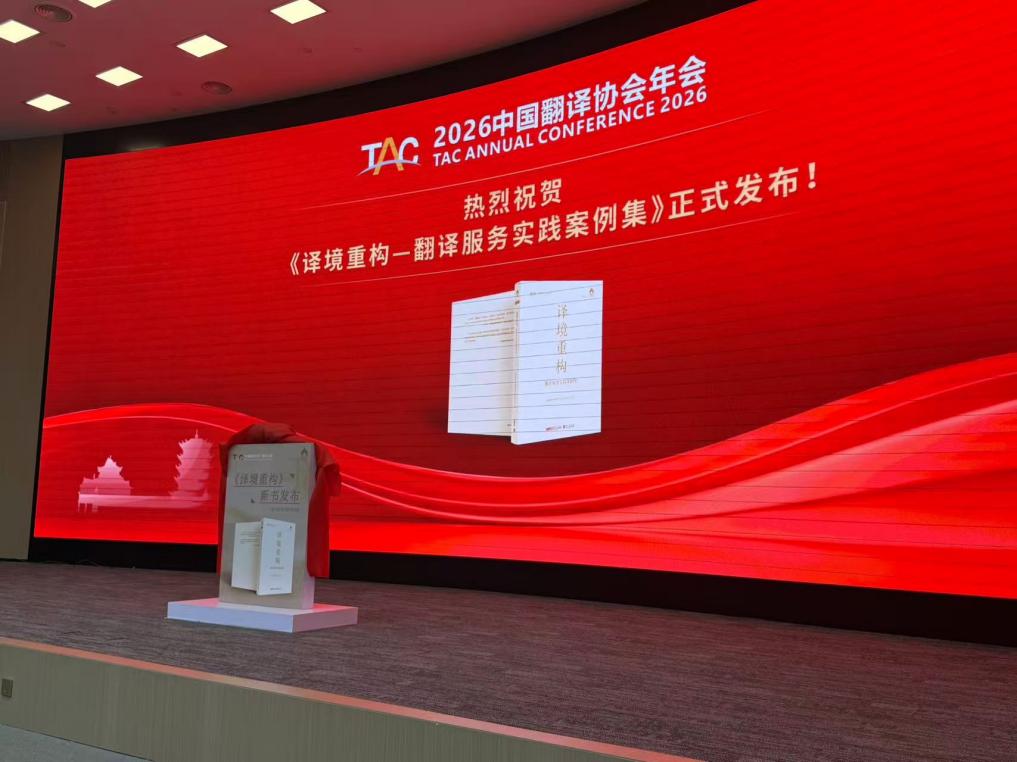
From April 25 to 26, 2026, the 2026 Annual Conference of the Translators Association of China was held at Wuhan University under the theme “Integration and Breakthrough: Infinite Possibilities for Translation in the Digital-Intelligent Era.” At the opening ceremony, Chang Bo, Director of the China Foreign Languages Publishing Administration, noted that the 15th Five-Year Plan Outline had made major strategic deployments, including “building a more effective international communication system.” Du Zhanyuan, President of the Translators Association of China, emphasized the need to further implement the “Four Translation Projects” — translator training, translation and dissemination, translation research, and translation training — and contribute the wisdom of the translation industry to serving national priorities. Guillaume Deniau, President of the International Federation of Translators, stated in a video address that digitalization and artificial intelligence are driving profound changes in the translation industry, while the core mission of translation remains to ensure accuracy, uphold responsibility, and maintain trust.
Five outstanding essays submitted by Tangneng Translation were selected for Reconstructing the Translation Landscape — Translation Service Practice Case Collection, a casebook officially published by the Translators Association of China. Tangneng Translation participated actively as deputy leader of the Best Practice Project Group. At the “Reconstructing the Translation Landscape · Value Coexistence” Translation Service Seminar, Tangneng Translation General Manager Ms. Su Yang served as the moderator of a roundtable discussion, engaging with industry experts on new approaches to translation services in the AI era. The Translation Services Professional Committee also received the 2025 Outstanding Branch Organization award from the Translators Association of China.
These forms of industry participation and accumulated professional achievements demonstrate Tangneng Translation’s role not only as a language service provider but also as a participant in developing industry standards and best practices.
3. Quality Assurance: Systematic Quality Control and Large-Scale Delivery Capabilities
In the AI era, translation service providers are expected to adopt a human-machine collaboration approach: AI improves efficiency, human professionals ensure quality, and systematic processes provide traceability. Translation services without systematic quality control are similar to a factory without quality inspection. Even if individual translators have strong capabilities, stable quality cannot necessarily be guaranteed for large-scale delivery.
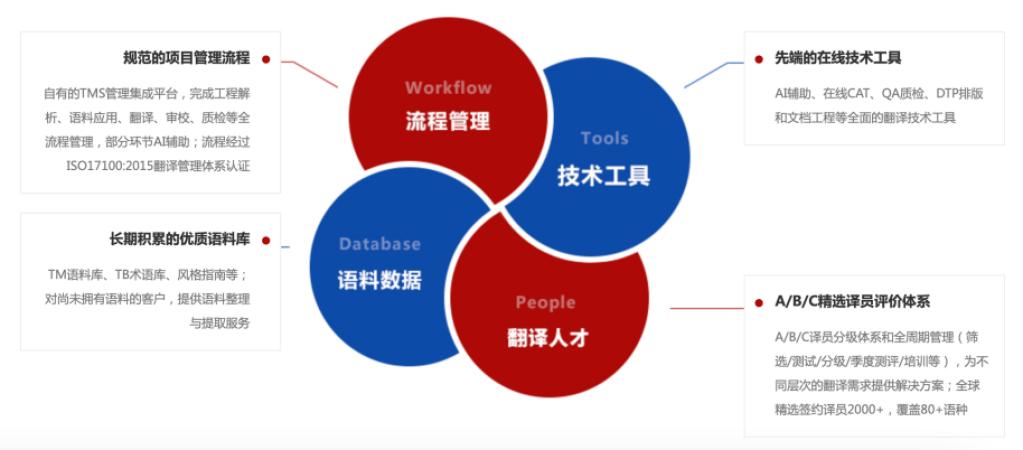
Tangneng Translation’s independently developed WDTP quality-control system integrates four dimensions: process management, language data, technical tools, and translation professionals, helping ensure the quality of translation project delivery.
Tangneng Translation has been deeply engaged in the language service sector for more than 20 years. It has served more than 100 Fortune Global 500 companies and provides more than 60 million words of multilingual translation services annually, along with more than 200 interpreting assignments each year.
AI can replace language conversion, but it cannot replace the entity responsible for the service. Through its in-depth participation in the Translators Association of China’s “Four Translation Projects,” the inclusion of five practical case studies in an industry publication, and the accountability and traceability capabilities of its WDTP quality-control system, Tangneng Translation provides enterprises in the AI era with translation service support that combines technological efficiency with human professional expertise.
For information about services in Shenzhen, please visit Room 605, Rongfeng Building, No. 12 Kejiyuan Road, Longgang District, Shenzhen. Contact: Ms. Joanna Zhang, Tel: 13022184137.
About us
The legend of Tower of Babel in the west: Babel means confusion, a word derived from the Tower of Babel in the Bible. The God, with the concern that people speaking a unified language might build such a tower leading to the heaven, messed up with their languages and left the Tower finally uncompleted. That half-built tower was then called the Tower of Babel, which initiated the war between different races.
Media Contact
Company Name: TalkingChina
Contact Person: Media Relations
Email: Send Email
Country: China
Website: https://www.talkingchinaus.com/
Press Release Distributed by ABNewswire.com
To view the original version on ABNewswire visit: Recommended Qualified Translation Companies in Shenzhen: What Service Value Exists Beyond Technical Capabilities?


