SUZHOU, JIANGSU, CHINA, October 10, 2026 /EINPresswire.com/ —
As demand for functional, attractive, and application-specific window treatments continues to grow, Suzhou Chengyuda Textile Co., Ltd. is strengthening its presence in the global curtain and home textile market. With a product portfolio covering curtain fabrics, finished curtains, and related accessories, the company serves buyers seeking textile solutions for residential interiors, hotels, offices, theaters, schools, hospitals, and public venues. Its offerings include Curtain Fabric and Curtain Track, two essential elements in creating coordinated window treatment systems. By combining fabric selection with practical curtain installation options, the company addresses the needs of customers who value appearance, light control, privacy, and ease of use when specifying curtains for different environments.
Curtains Play an Increasingly Multifunctional Role in Interior Design
Curtains have long been used to decorate windows and provide privacy, but their role in modern buildings extends well beyond appearance. They can help regulate incoming daylight, reduce glare, create a more comfortable indoor atmosphere, and complement the architectural character of a room. Depending on the fabric and construction, curtains may also contribute to thermal comfort, sound absorption, and the separation of spaces.
In residential settings, homeowners often prioritize color, texture, ease of maintenance, and compatibility with furniture and flooring. Bedrooms may require stronger light-blocking performance, while living rooms often benefit from a combination of daylight diffusion and privacy. In hotels and other hospitality environments, curtains must balance visual consistency with practical considerations such as durability, cleaning requirements, and frequent use.
Commercial projects introduce additional requirements. Offices may need to reduce glare on computer screens, while theaters and event venues may require fabrics suited to stage presentations and lighting conditions. Hospitals and other healthcare facilities may use specialized curtains to create privacy between beds or treatment areas. Each application calls for a careful assessment of the fabric, the installation system, and the environment in which the product will be used.
Suzhou Chengyuda Textile Co., Ltd. focuses on curtain and home textile products for a broad range of applications. Its product categories include sheer curtains, dimout curtains, blackout curtains, velvet curtains, chenille curtains, medical curtains, and stage-related textiles. This range reflects the diversity of requirements facing curtain manufacturers and suppliers as they serve residential, hospitality, institutional, and entertainment markets.
Curtain Fabric: Combining Appearance and Performance
Curtain Fabric is the foundation of a window treatment. Its fiber composition, weave, weight, texture, color, and finishing process all influence the final curtain’s appearance and performance. Selecting an appropriate material is therefore an important step for interior designers, project contractors, distributors, and retailers.
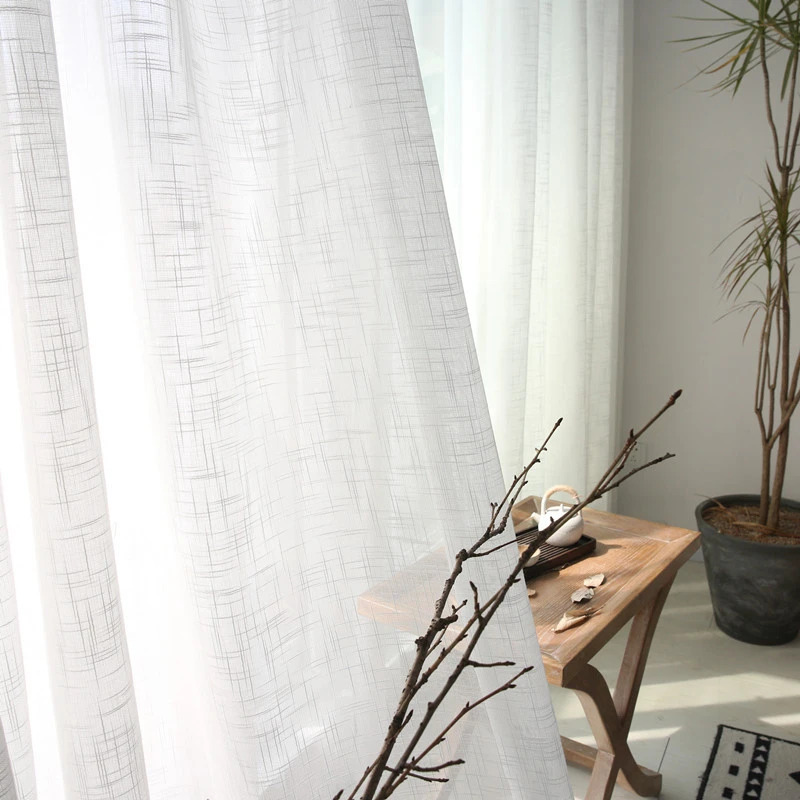
Sheer fabrics are commonly used when the objective is to soften daylight while maintaining a degree of visual openness. They can create a light, airy appearance in living rooms, reception areas, and hospitality spaces. Depending on their construction, sheer curtains may also be combined with heavier curtains to provide greater privacy when needed.
Dimout fabrics are designed to reduce the amount of light entering a room, although their performance varies by construction and specification. They can be useful in bedrooms, hotel rooms, meeting spaces, and other environments where reduced brightness is desirable without necessarily requiring complete darkness.
Blackout fabrics are intended for applications that call for stronger light blocking. They are frequently considered for bedrooms, hotels, media rooms, and selected commercial spaces. Buyers should verify the stated light-blocking performance of a particular product and consider how the fabric, seams, side gaps, and installation method affect the finished result.
Velvet and chenille fabrics offer distinctive textures that can add visual depth to an interior. Velvet is often associated with formal or theatrical settings, while chenille is valued for its soft, textured surface. The suitability of either material depends on the desired appearance, weight, durability, maintenance requirements, and intended installation.
Suzhou Chengyuda Textile Co., Ltd. supplies different curtain fabric categories for these varied needs. For project buyers, this range can simplify the process of comparing materials for a specific interior design concept. Rather than selecting fabric on appearance alone, purchasers should evaluate the required light control, fabric weight, color consistency, cleaning method, and expected frequency of use.
Fabric performance can also be influenced by finishing treatments. Depending on the product and application, finishes may be selected to support specific requirements such as flame retardancy or other functional characteristics. Where a project requires certified performance, buyers should confirm the relevant test reports, certification scope, and applicable standards for the exact fabric being purchased.
The Importance of Curtain Track Systems
Even a well-selected curtain fabric requires an appropriate installation system to function as intended. Curtain Track provides the mechanism through which curtains are supported and moved across a window, doorway, or other designated opening. Track design influences the curtain’s movement, installation flexibility, appearance, and compatibility with the fabric’s weight.
A suitable track system can help curtains open and close smoothly while maintaining a neat appearance. It may be installed on ceilings or walls, depending on the product design and the building layout. Straight tracks can suit many standard windows, while flexible or bendable systems may be considered for curved openings or more complex interior designs when the selected track is designed for that application.
The track must be matched to the curtain’s dimensions and weight. Lightweight sheer curtains may require different hardware from heavy velvet or stage curtains. The length of the track, the number of brackets, the mounting surface, and the operating method should all be assessed before installation. For large or frequently operated curtains, additional attention to load capacity and the durability of moving components can be important.
Curtain tracks are also relevant to commercial and institutional environments, where reliability and ease of maintenance may be just as important as appearance. In hotels, conference facilities, hospitals, and theaters, curtains may be opened and closed repeatedly throughout the day. A properly selected track system can support routine operation and reduce the risk of avoidable maintenance problems.
For buyers considering Curtain Track products from Suzhou Chengyuda Textile Co., Ltd., the main task is to confirm that the chosen system matches the fabric and the intended environment. Product dimensions, mounting arrangements, operating requirements, and compatibility with the finished curtain should be discussed before a project order is finalized.
Integrating Fabric and Hardware for Better Project Outcomes
Curtain procurement is most effective when fabric and hardware are considered as parts of one system. A heavy fabric paired with an unsuitable track can create operating difficulties, while an installation system that does not match the curtain dimensions may affect the finished appearance.
The first step in planning a curtain project is to establish the function of each window treatment. Designers and buyers should identify whether the priority is daylight diffusion, privacy, light blocking, decoration, stage use, or another application-specific requirement. These objectives help narrow the choice of fabric and determine the appropriate curtain construction.
Accurate measurement is equally important. Buyers should confirm the width of the window or opening, the available mounting area, the required curtain drop, and the intended stacking space when the curtains are fully open. The selected track or pole should be measured according to the manufacturer’s guidance, and allowance should be made for brackets, end stops, overlaps, and other installation details where relevant.
The curtain heading also influences the final result. Options such as rod pockets, grommets, back tabs, and pleated headings create different visual effects and may require different installation arrangements. The selected heading should be compatible with the intended track or pole and should support the desired movement and fullness.
Suzhou Chengyuda Textile Co., Ltd. provides product information and customization options for buyers evaluating different curtain styles and fabric requirements. Its online product information describes options for color customization, ready-made products, and made-to-order designs. For customized projects, buyers should confirm minimum order quantities, sample availability, lead times, color specifications, and the precise scope of customization directly with the supplier.
Supporting Hospitality and Commercial Projects
Hotels, theaters, offices, schools, and healthcare facilities often require curtains in larger quantities than individual residential projects. In these environments, product consistency, delivery coordination, durability, and maintenance planning can have a significant influence on procurement decisions.
Hotels may use different curtain types across bedrooms, meeting rooms, restaurants, and public areas. Blackout curtains may be preferred in sleeping areas, while decorative or dimout fabrics may be suitable for reception spaces and lounges. Consistent colors and coordinated hardware can help maintain a unified interior design across multiple rooms.
Theaters and event venues have different priorities. Stage curtains may need substantial fabric weight, appropriate draping characteristics, and verified flame-performance properties according to the venue’s requirements. The curtain track or supporting system must also be selected according to the size, weight, and operating frequency of the curtain. Buyers should confirm that any stated fire-safety performance applies to the exact product and meets the relevant local regulations.
Medical environments may require curtains designed for privacy and routine cleaning. Procurement teams should consider the intended location, cleaning procedures, replacement frequency, and any required hygiene or performance specifications. Where special certifications or test reports are required, documentation should be reviewed before the products are accepted for installation.
By offering several curtain categories, Suzhou Chengyuda Textile Co., Ltd. provides buyers with options for different types of projects. Successful project delivery, however, depends on a detailed specification process that covers fabric performance, dimensions, hardware compatibility, delivery schedules, installation requirements, and after-sales arrangements.
Manufacturing, Customization, and Quality Considerations
Curtain production involves a series of interconnected processes, which may include yarn preparation, weaving or knitting, dyeing, finishing, cutting, sewing, and final inspection. The exact production route varies according to the fabric type and the finished product. Coordination between these stages helps maintain consistent color, dimensions, texture, and construction.
Suzhou Chengyuda Textile Co., Ltd. describes its experience across the textile supply chain, from weaving to sewing, and highlights cooperation with manufacturing partners for different production requirements. The company also promotes OEM and ODM services, which can be relevant to distributors, brands, interior design firms, and project contractors seeking customized products.
Customization can involve color, fabric construction, dimensions, curtain headings, and other product details. For large orders, it is advisable to approve samples before mass production. A sample allows the buyer to assess the material’s appearance, hand feel, color, drape, and compatibility with the planned installation system.
Quality control should cover more than visual inspection. Depending on the product, checks may include dimensions, seam construction, fabric defects, color consistency, track operation, and the relevant performance characteristics specified in the order. Clear acceptance criteria help reduce misunderstandings between suppliers and buyers.
For commercial projects, purchasers should also establish how products will be packaged, labeled, and delivered. Curtains and fabrics may need to be organized by room, building, floor, or installation phase. Clear documentation and coordinated packing can help installation teams work more efficiently and reduce the likelihood of mix-ups on site.
Meeting International Buyer Expectations
Curtain and home textile buyers increasingly work across international supply chains, making communication and documentation important elements of supplier evaluation. Importers and project contractors need accurate product specifications, clear pricing, realistic lead times, and a reliable process for handling samples and production approvals.
Export projects may also require compliance with destination-market regulations or project-specific specifications. Flame-retardant performance, textile safety, recycled content, and other claims should be supported by documentation that applies to the particular product. Buyers should check the relevant certificate or test report, its validity, and the standards covered rather than assuming that one document applies to an entire product range.
Suzhou Chengyuda Textile Co., Ltd. reports partnerships with customers in several international markets, including North America, Europe, and Asia. For buyers considering a long-term relationship, a structured review of product capabilities, production arrangements, sample quality, communication, and after-sales support can help establish whether the supplier is a suitable match.
As interior design continues to place importance on both aesthetics and practical performance, curtain products must meet a range of expectations. Fabric selection determines much of the visual character and light-control performance, while the track system supports daily operation. Treating these components as a coordinated solution can help buyers achieve more consistent results across residential and commercial projects.
About Suzhou Chengyuda Textile Co., Ltd.
Suzhou Chengyuda Textile Co., Ltd. is a textile company based in Suzhou, Jiangsu Province, China, specializing in curtain and home textile products for domestic and international customers. Its product portfolio includes sheer curtains, dimout curtains, blackout curtains, velvet curtains, chenille curtains, medical curtains, stage curtains, Curtain Fabric, and Curtain Track. The company describes its experience across textile production processes from weaving to sewing and offers OEM and ODM services for customers with specific design and project requirements. Its products are intended for applications in homes, hotels, offices, theaters, schools, hospitals, and other public or commercial environments. Buyers seeking product details, customization information, or project quotations can visit the company’s official website at www.cyd-curtain.com.
Address: Room 308, Block B, Kelaimei Building, No. 819 Shengtan Road, Shengze Town, Wujiang District, Suzhou City, Jiangsu Province
Official Website: https://www.cyd-curtain.com/
Yafeng Huang
Suzhou Chengyuda Textile Co., Ltd.
asher@cydtextile.com
Legal Disclaimer:
EIN Presswire provides this news content “as is” without warranty of any kind. We do not accept any responsibility or liability
for the accuracy, content, images, videos, licenses, completeness, legality, or reliability of the information contained in this
article. If you have any complaints or copyright issues related to this article, kindly contact the author above.

Media gallery