
Key Takeaways
- Exterior painting estimates can swing widely because home size, siding material, access, and the amount of prep work all factor into the final number
- Surface prep like scraping, priming, caulking, and wood repair often adds the most labor time to a project, so it pays to ask what prep is included before comparing quotes
- Homes in Richmond’s Old and Historic Districts may need Commission of Architectural Review approval before an exterior color or paint project moves forward
- Houses built before 1978 fall under federal lead-paint renovation rules that can affect how a project is prepped and cleaned up
- Reading the written scope line by line, rather than comparing bottom-line totals, is the clearest way to understand what a painting estimate actually covers
Getting three exterior painting quotes for the same house can feel like getting quotes for three different houses. One number is thousands of dollars higher than another, and nothing on the page explains why. The gap usually comes down to what each contractor is actually planning to do, not just how much paint they plan to use.
Why Your Exterior Estimate Will Vary
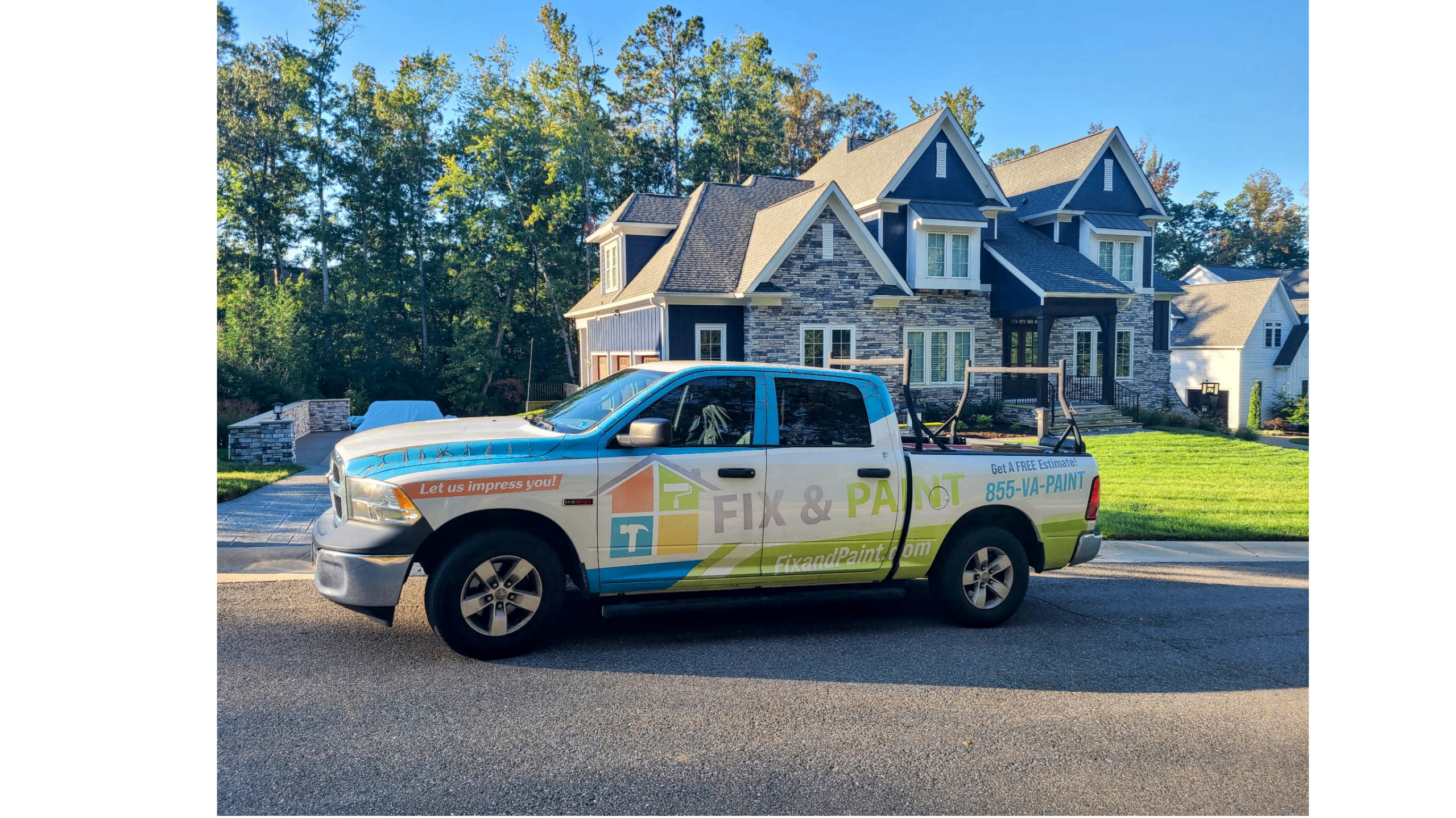
Exterior house painting in the Richmond area typically falls somewhere between about $3,000 and $15,000 or more, with an average cost per square foot of $3.00 to $6.00 depending on the source and the scope involved. That is widespread, and as Fix and Paint, a local Richmond painting contractor explains, no two homes bring the same combination of size, surface condition, access challenges, and repair needs to the table. A 1,200-square-foot bungalow with sound siding and simple trim is a very different job than a 3,500-square-foot home with peeling paint, steep rooflines, and ornate window casings.
The sections below break down the biggest cost drivers for a 2026 exterior repaint in Richmond, from square footage to local permitting rules, so homeowners can read any quote with a sharper eye.
What Drives the Price of Your Project
Several variables combine to produce a final number on an exterior painting estimate. Understanding each one makes it much easier to spot whether a quote is thorough or missing something important.
Home Size and Paintable Surface Area
Size is the most obvious driver, but it is measured differently than many homeowners expect. Painters do not simply look at a home’s square footage on a listing; they calculate paintable surface area, which accounts for wall height, roofline, and the number of exterior faces, then subtracts windows and doors from that total. A taller home with a smaller footprint can require more paint and labor than a sprawling single-story house, because vertical wall area adds up quickly. Smaller homes under about 1,200 square feet tend to land toward the lower end of the cost range, mid-size homes between roughly 1,500 and 2,500 square feet fall in the middle, and larger homes above 2,500 square feet push toward the higher end, though siding type and condition can shift any of these ranges significantly. This is also why two homes with the same listed square footage can receive very different quotes if one has a complex roofline with multiple gables and the other has a simple rectangular shape.
Siding Material and Surface Condition
Siding material changes both the prep work required and the paint needed to get a durable finish. Wood siding often needs sanding, spot priming, and sometimes replacement of damaged boards before a topcoat goes on. Brick and stucco can call for specialty breathable coatings and more extensive cleaning, since trapped moisture under the wrong paint type can cause peeling or damage down the road. Vinyl and aluminum siding generally take less prep but still require the right primer and paint formulation to bond properly and resist fading.
Surface condition matters just as much as the material itself. A home with chalky, cracked, or peeling paint needs more scraping, sanding, and priming than one with a sound existing coat, and that extra labor shows up directly in the estimate.
Stories, Steep Roofs, and Hard-to-Reach Areas
Access is one of the most underestimated cost factors in exterior painting. A single-story ranch with easy ground-level access is straightforward to paint safely and efficiently. A two- or three-story home, or one with a steep roofline, dormers, or tall gables, often requires scaffolding or lift equipment to reach safely, and that equipment adds both cost and setup time to a project.
Hard-to-reach areas are not limited to height. Homes tucked close to fences, dense landscaping, or neighboring structures can also slow down a crew, since extra care and masking are needed to protect surrounding property. Richmond’s many older neighborhoods, where homes sit closer together on smaller lots, often present exactly this kind of access challenge.
Trim, Windows, and Architectural Details
Trim, window casings, railings, shutters, and porch details all add labor because they require careful masking, cutting in by hand, and often a different paint sheen than the main siding. A home with simple, minimal trim moves through a project faster than one with elaborate Victorian-style millwork, decorative brackets, or a wraparound porch with turned spindles.
Richmond has no shortage of homes with this kind of architectural character, particularly in older neighborhoods built with ornamental woodwork. The more intricate the trim package, the more time a crew spends on detail work rather than broad coverage, and that time difference should be reflected clearly in a written estimate.
Why Prep and Repairs Add Up
Preparation is often the single biggest hidden cost in an exterior painting project, and it is also the step that determines how long a paint job actually lasts. Power washing removes dirt, mildew, and loose debris so new paint can bond properly. Scraping and sanding address peeling or flaking paint. Caulking seals gaps around trim, windows, and siding joints to keep water out. Priming bare wood or repaired areas ensures the topcoat adheres evenly and does not absorb unevenly into the surface.
Repairs add another layer on top of basic prep. Rotted wood trim, damaged siding, or deteriorated sill nosings need to be fixed before paint goes on, since painting over damaged wood only hides a problem rather than solving it. Pairing carpentry and painting work under one team can simplify a project this way: repairs and prep can be sequenced together instead of requiring separate contractors and separate trips. Skipping or rushing these steps is also one of the most common reasons a paint job fails early, with bubbling or peeling showing up within a season or two instead of lasting several years.
Because prep and repair work can represent a large share of the total labor on a project, it deserves close attention in any written estimate. A quote that glosses over these details, or lumps them into a vague line item, makes it hard to know what is actually being paid for.
Richmond Rules That Can Affect Your Project
Local rules add a layer of planning that homeowners outside Richmond’s older neighborhoods might not need to think about. Two in particular are worth understanding before scheduling a 2026 repaint.
Old and Historic District Approvals
Richmond properties located in Old and Historic Districts, including areas like the Fan District and Church Hill, may need approval from the Richmond Commission of Architectural Review before certain exterior changes move forward. Whether approval is required often depends on the scope of the project and whether the change is visible from a public street or alley; some painting projects may be eligible for staff-level approval with an application and project specifications, rather than a full commission review. Homeowners in these districts should factor this review step into their project timeline, since it can affect how quickly work can start.
Lead-Based Paint Rules for Pre-1978 Homes
Homes built before 1978 fall under the EPA’s Renovation, Repair, and Painting (RRP) rule, which generally applies to paid work that disturbs painted surfaces, including scraping, sanding, and certain carpentry repairs. Under this rule, affected surfaces must be tested for lead-based paint or presumed to contain it, and firms performing covered work must use RRP-certified crews, follow lead-safe work practices, and provide pre-renovation education to the homeowner. For exterior projects, required containment typically includes plastic sheeting extending at least 10 feet in all directions from the area being worked on, along with careful dust containment and thorough cleanup afterward. Minor exterior work disturbing a small area, generally 20 square feet or less, is typically exempt from the full work-practice requirements, though exceptions apply. Richmond has many homes built well before 1978, so this is a relevant question to raise with any contractor bidding on an older property.
Reading a Written Scope Before You Sign
Comparing exterior painting estimates meaningfully means comparing what is actually written down, not just the total at the bottom of the page. A thorough written scope should spell out several things clearly.
- Preparation steps included: power washing, scraping, sanding, caulking, and priming should all be named specifically, not bundled into a single vague line.
- Materials and paint brand: the paint brand, product line, and number of coats should be stated, since a two-coat job with quality paint behaves very differently over time than a single-coat budget job.
- Repair work covered: any wood rot repair, siding replacement, or carpentry work should be itemized, including what happens if additional damage is discovered once work begins.
- Cleanup and property protection: the scope should describe how landscaping, windows, and outdoor fixtures will be protected, and what cleanup looks like once the project wraps up.
- Warranty terms: a written workmanship warranty, along with any manufacturer paint warranty, should be spelled out with its length and what it covers.
The Bottom Line on Comparing Estimates
Exterior painting prices in Richmond vary for real, identifiable reasons: home size and paintable surface area, siding material and condition, access challenges like multiple stories or steep rooflines, trim complexity, and the amount of prep and repair work required. Local rules around historic districts and lead-based paint add another layer of consideration for many Richmond properties, particularly in the city’s older neighborhoods.
The most useful habit for any homeowner planning a 2026 repaint is to set aside the bottom-line number at first glance and read what each estimate actually promises to do. A written scope that spells out prep, materials, repairs, cleanup, and warranty terms makes it possible to compare quotes on equal footing instead of guessing why one number is higher than another.
Fix & Paint
ken@fixandpaint.net
+1 804 441 8278
3006 Lincoln Avenue
Richmond
VA
23228
United States


